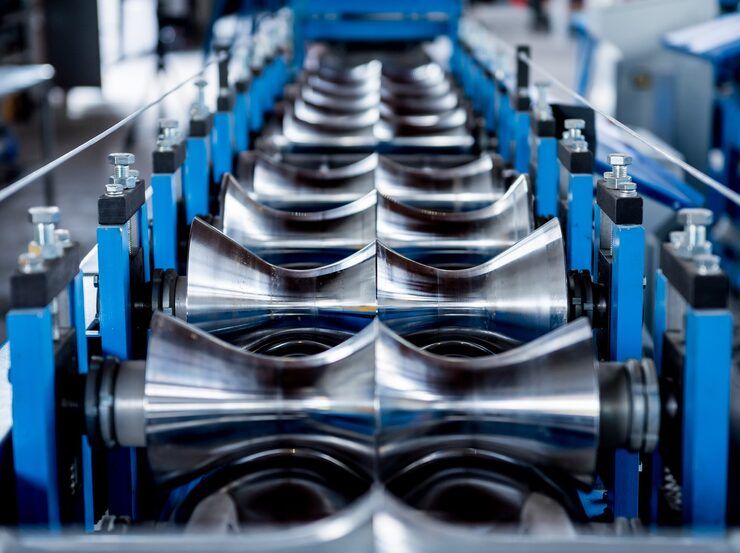
Roll forming machines are continuous metal-processing systems designed to shape long strips of sheet or coil material into specific profiles. Instead of forming a complete shape in one operation, the material passes through several forming stations that gradually bend it into the required geometry.
This process is widely used for producing consistent metal profiles for construction, transportation, manufacturing, storage systems, and other industrial applications. Understanding how roll forming machines work helps explain why controlled material feeding, tooling, alignment, and dimensional inspection are important.
Context
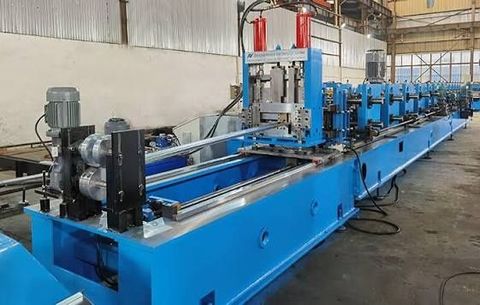
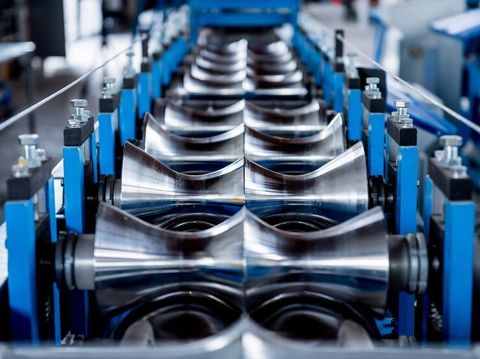
A roll forming machine shapes metal by passing a continuous strip through a sequence of rotating rollers. Each roller station performs a small amount of bending. As the material progresses through the machine, these gradual changes produce the final cross-sectional profile.
The process generally begins with a coil of sheet or strip material. A decoiler holds and releases the coil, while a feeding system guides the material toward the forming section. The forming rolls then progressively bend the strip.
After the profile reaches its intended shape, a cutting system can separate sections into specified lengths. Depending on the machine configuration, additional operations such as punching or hole making can take place before or during forming.
Common materials used in roll forming include:
- Carbon steel
- Stainless steel
- Aluminum
- Galvanized steel
- Pre-painted metal
- Other suitable sheet and strip materials
The final profile depends on factors such as material thickness, width, mechanical properties, roll geometry, forming sequence, and production requirements.
| Stage | Main Function | Typical Result |
|---|---|---|
| Decoiling | Releases material from a coil | Continuous strip |
| Feeding | Guides material into the forming section | Controlled material movement |
| Roll forming | Gradually bends the strip | Desired profile |
| Punching | Creates specified holes or features | Prepared profile |
| Cutting | Separates formed sections | Individual lengths |
| Inspection | Checks dimensions and quality | Verified profile |
Unlike processes that reshape an individual blank at once, roll forming continuously processes long material. This makes it particularly suitable for applications requiring repeated profiles with consistent dimensions.
Importance
Consistency is one of the main reasons roll forming machines are used in industrial production. A carefully designed forming sequence can produce long lengths of material with repeatable cross-sectional dimensions.
Dimensional consistency can be important when profiles must fit with other components. For example, structural sections, framing components, rails, channels, and panels may need specific widths, angles, holes, or bends to function correctly within an assembly.
Roll forming also affects material utilization. Because the process gradually bends the strip rather than repeatedly cutting individual blanks into shape, it can support efficient continuous production for suitable profile designs.
Several groups can be affected by the performance of a roll forming system:
- Machine operators monitor feeding, forming, cutting, and safety conditions.
- Engineers develop profile geometry and forming sequences.
- Quality teams inspect dimensions and surface conditions.
- Maintenance teams manage rolls, bearings, drives, sensors, and other components.
- Manufacturers use the resulting profiles in larger assemblies and structures.
Proper setup is important because incorrect alignment or forming conditions can create problems such as twisting, bowing, uneven edges, dimensional variation, or surface marks.
Recent Updates
Recent developments in roll forming increasingly involve automation, digital controls, monitoring systems, and flexible production arrangements. Modern systems can incorporate programmable controllers, sensors, automated feeding, and electronic monitoring.
Computer-aided design also plays an important role. Engineers can model a desired profile and examine its geometry before manufacturing the forming tools. Digital design can help identify potential issues with bend sequences, clearances, and material behavior.
Another development is greater integration between forming equipment and downstream processes. Depending on the application, a production line may combine decoiling, leveling, punching, forming, cutting, and other operations.
Industry discussions also increasingly focus on energy efficiency, material utilization, process monitoring, and automation. These developments are particularly relevant where manufacturers need repeatable production and detailed process information.
The following factors commonly influence modern roll forming development:
- Automated control and monitoring
- Flexible profile production
- Digital engineering and simulation
- Inline inspection
- Improved material handling
- Integration with other production stages
The exact capabilities vary significantly between machines and applications, so technical specifications should be evaluated according to the intended profile and material.
Laws or Policies
Roll forming machines are subject to workplace safety requirements, machinery regulations, electrical standards, and environmental rules. The specific requirements depend on the country, region, machine configuration, workplace, and materials being processed.
In the United States, workplace machinery safety is addressed through the Occupational Safety and Health Administration (OSHA), including requirements related to machine guarding and hazardous mechanical operations.
In the European Union, machinery placed on the market is subject to applicable European legislation and harmonized standards. The EU Machinery Regulation is an important part of the current regulatory framework, with its application depending on the relevant product and implementation dates.
In India, industrial workplaces can be subject to requirements under applicable occupational safety legislation, including the Occupational Safety, Health and Working Conditions Code and relevant state-level implementation provisions.
Important compliance areas may include:
- Machine guarding
- Emergency stopping systems
- Electrical safety
- Lockout and isolation procedures
- Operator training
- Workplace risk assessment
- Noise and environmental considerations
- Maintenance and inspection procedures
Regulatory requirements can change, and businesses should consult the appropriate government authorities and qualified safety professionals for requirements applicable to their specific facility.
Tools and Resources
Several types of tools can help people understand, design, operate, or evaluate roll forming processes.
CAD software is commonly used to develop profile drawings and examine dimensions. Engineering references can help with material properties, bending behavior, tolerances, and section geometry.
Useful resources include:
- Government workplace-safety websites
- Machinery safety standards organizations
- CAD and engineering software
- Material specification databases
- Manufacturer technical documentation
- Metal-forming engineering references
- Dimensional inspection tools
A basic profile worksheet can also help organize technical information.
| Parameter | Information to Record |
|---|---|
| Material | Steel, aluminum, stainless steel, etc. |
| Thickness | Sheet or strip thickness |
| Strip width | Starting material width |
| Profile dimensions | Widths, heights, and angles |
| Required length | Finished section length |
| Hole pattern | Position and dimensions |
| Tolerance | Permitted dimensional variation |
| Inspection method | Measurement approach |
Digital calipers, micrometers, gauges, measuring tables, and optical inspection equipment may be used depending on the required accuracy.
For technical research, official government publications and recognized standards organizations should take precedence over informal sources when determining compliance requirements.
FAQs
What is a roll forming machine?
A roll forming machine is equipment that continuously bends sheet or strip material through a series of rollers to create a specific cross-sectional profile.
How does a roll forming machine maintain consistency?
Consistency depends on controlled material feeding, accurately designed forming rolls, proper alignment, stable machine operation, and appropriate inspection procedures.
What materials can roll forming machines process?
Common materials include carbon steel, galvanized steel, stainless steel, and aluminum. The suitable material depends on the machine design and required profile.
What products can be made with roll forming?
Roll forming can produce many continuous metal profiles, including channels, framing sections, rails, panels, structural sections, and other application-specific shapes.
Why are multiple forming stations used?
Multiple stations gradually bend the material. This controlled sequence helps achieve the intended profile while managing deformation across the length of the strip.
Conclusion
Roll forming machines create consistent metal profiles by progressively bending continuous material through a series of carefully designed roller stations. Feeding, alignment, tooling, cutting, automation, and inspection all contribute to the final result.
The technology is relevant across many industrial applications where repeatable metal profiles are required. Understanding the basic process makes it easier to evaluate profile design, material selection, machine configuration, safety requirements, and quality-control practices.
As automation and digital engineering continue to develop, roll forming systems are increasingly integrated with sensors, programmable controls, digital design tools, and downstream manufacturing processes.
For anyone learning about metal forming, the most useful starting point is to understand how material characteristics and roll geometry interact throughout the forming sequence.