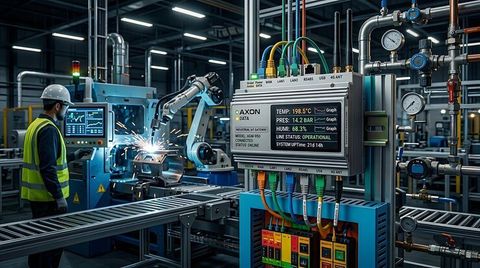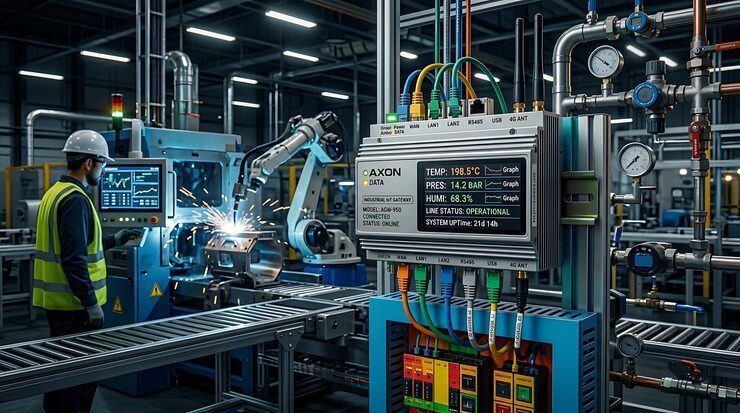
Industrial automation terminals are important connection points within electrical and control systems used in factories, processing plants, machine panels, and other industrial environments. They help connect field wiring, sensors, actuators, controllers, power circuits, and communication equipment in an organized way.
Understanding industrial automation terminals provides a useful introduction to industrial control technologies. Terminal blocks, protective conductor terminals, signal terminals, and interface terminals can support clear wiring layouts and easier inspection while connecting different parts of an automation system.
Context – What Are Industrial Automation Terminals?
An industrial automation terminal is generally a connection point used to join electrical conductors or interface field devices with control equipment. Depending on the application, terminals may handle power, digital signals, analog signals, protective grounding, or communication connections.
In a typical industrial control panel, terminals can sit between incoming field wiring and equipment such as programmable logic controllers (PLCs), input/output modules, relays, motor controllers, sensors, and actuators.
Common types include:
| Terminal Type | Typical Purpose |
|---|---|
| Feed-through terminal | Connects conductors in an electrical circuit |
| Ground terminal | Provides protective conductor connections |
| Fuse terminal | Combines terminal connection with circuit protection |
| Disconnect terminal | Allows controlled circuit separation |
| Sensor terminal | Connects field sensors and signal wiring |
| Multi-level terminal | Supports several connections in limited panel space |
| Interface terminal | Helps connect field wiring with control equipment |
IEC 60947-7-1:2025 specifies requirements for terminal blocks for copper conductors and covers both screw-type and screwless clamping arrangements. The standard includes terminal blocks intended for industrial or similar applications.
Industrial automation terminals are therefore more than simple connection points. Their electrical ratings, conductor compatibility, mechanical construction, insulation characteristics, and installation method all affect how they function within a control system.
Importance – Why Do Industrial Control Terminals Matter?
Industrial control technologies depend on reliable electrical connections. A poorly selected or incorrectly installed terminal can create problems such as loose connections, excessive heating, signal interruption, wiring confusion, or difficulty during troubleshooting.
Terminals also help organize complex control panels. Clear labeling and logical grouping allow technicians and engineers to trace circuits more easily.
They can be particularly relevant in:
- Manufacturing automation
- Packaging equipment
- Process control systems
- Motor control panels
- Building automation
- Energy systems
- Water and wastewater systems
- Transportation equipment
Industrial automation terminals also support the connection of PLC-based systems. IEC 61131-3:2025 defines programming languages and related elements for programmable controllers, including Structured Text, Ladder Diagram, Function Block Diagram, and Sequential Function Chart.
The physical wiring and the control logic work together. Sensors provide information, controllers process that information, and actuators respond through electrical control circuits.
Recent Updates – Trends and Developments
Industrial control technology is increasingly connected, distributed, and software-oriented. This development affects how control panels, terminal arrangements, and field connections are designed.
One important recent development is the continued modernization of international standards. IEC 60947-7-1 was revised in 2025, replacing the 2009 edition. The newer edition expanded the scope for smaller conductor cross-sections and introduced additional testing provisions.
The IEC 60947 family has also continued to develop. The 2026 series includes updated publications across several parts of low-voltage switchgear and controlgear, including the 2025 edition of IEC 60947-7-1.
Another development is the increased integration of digital communication into industrial systems. Automation architectures can combine conventional electrical connections with Ethernet-based communication, distributed I/O, remote monitoring, and edge computing.
Cybersecurity is also becoming an important consideration. NIST SP 800-82 Rev. 3 provides guidance for protecting operational technology while considering its performance, reliability, and safety requirements. NIST lists industrial control systems, PLCs, SCADA systems, and distributed control systems within its OT security guidance.
As automation systems become more connected, terminal layouts increasingly need to be considered alongside network architecture, documentation, access controls, and system safety.
Laws or Policies – Standards and Regulatory Considerations
Industrial automation terminals can be affected by different standards and regulations depending on the country, machine type, voltage level, installation environment, and intended application.
IEC 60204-1 addresses the electrical, electronic, and programmable electronic equipment and systems used with machines. Its requirements include areas such as electrical protection, protective bonding, emergency stop functions, control circuits, electromagnetic compatibility, and technical documentation.
In the United States, OSHA's 29 CFR 1910.147 addresses control of hazardous energy during machine servicing and maintenance. It requires appropriate energy-control procedures, employee training, and verification of isolation where unexpected energization or stored energy could create hazards.
In the European Union, Regulation (EU) 2023/1230 establishes health and safety requirements for machinery and related products. Its main application date is January 20, 2027, with certain provisions applying earlier.
Compliance should therefore be evaluated according to the specific installation and jurisdiction. A terminal's conformity with one standard does not automatically mean that an entire machine or control panel meets every applicable regulatory requirement.
Tools and Resources – Useful Information Sources
Several technical resources can help readers understand industrial automation terminals and control technologies.
- IEC publications for international electrical and automation standards
- NIST publications for operational technology cybersecurity guidance
- OSHA regulations for workplace safety requirements in the United States
- EUR-Lex for European Union legislation
- Manufacturer technical documentation for terminal specifications and installation requirements
- Electrical drawings and wiring diagrams for understanding panel connections
- PLC documentation for understanding controller inputs, outputs, and communication interfaces
When evaluating a terminal, useful technical information includes conductor range, rated voltage, rated current, insulation characteristics, mounting method, environmental conditions, and applicable standards.
Documentation should also identify terminal numbers, connected circuits, wire references, and protective conductors where relevant. Consistent documentation can make commissioning, inspection, maintenance, and future modifications easier to manage.
FAQs – Industrial Automation Terminals
What are industrial automation terminals?
They are electrical connection points used to organize and connect conductors in automation and control systems. They may connect power, signals, sensors, actuators, controllers, or communication equipment.
What is a terminal block used for?
A terminal block provides a structured method for joining electrical conductors. Different designs can also provide functions such as circuit separation, protective grounding, fusing, or signal distribution.
Are industrial automation terminals part of PLC systems?
They can be. Terminals are commonly used to connect field wiring with PLC input/output modules and other control equipment. The exact arrangement depends on the system architecture.
Which standards are relevant to terminal blocks?
IEC 60947-7-1:2025 is an important standard for terminal blocks for copper conductors. Other standards may apply depending on the machine, installation, electrical system, and geographic market.
Why is cybersecurity relevant to automation terminals?
Terminals themselves are primarily physical electrical connection components, but they form part of larger automation systems that may connect to networks and digital controllers. NIST's OT security guidance highlights the need to consider cybersecurity together with operational reliability and safety.
Conclusion – Industrial Automation Terminals
Industrial automation terminals provide organized electrical connections within control panels and automation systems. They can support connections between field devices, PLCs, sensors, actuators, power circuits, and communication equipment.
Understanding terminal types, electrical ratings, wiring practices, applicable standards, and safety requirements provides a useful foundation for learning industrial control technologies.
Modern automation is also moving toward more connected and digitally integrated architectures. For that reason, terminal selection and panel design increasingly need to be considered alongside machine safety, documentation, communications, and operational technology cybersecurity.
As standards continue to develop, engineers and technical teams should refer to the current requirements applicable to their particular machine, installation, industry, and jurisdiction.