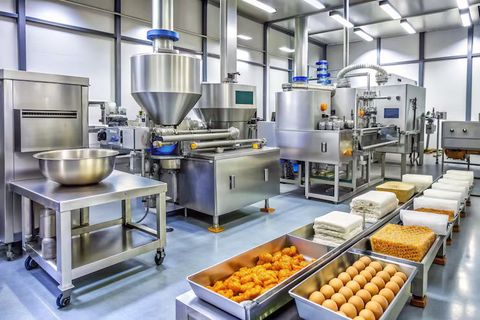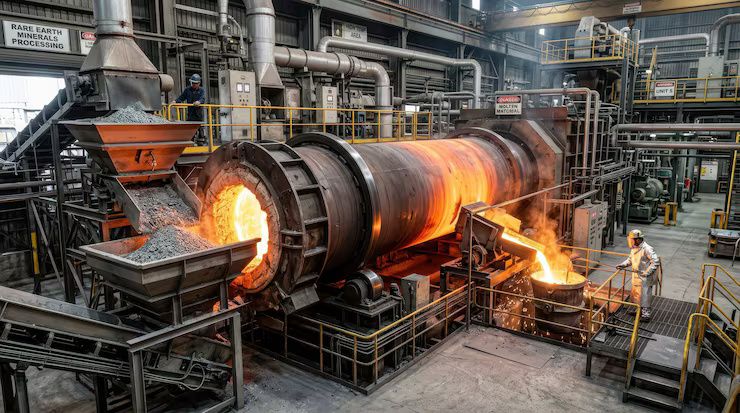
Industrial furnaces are specialized heating systems used to raise materials to controlled temperatures for manufacturing and processing. They are found across industries such as metal processing, ceramics, glass, chemicals, heat treatment, food processing, and advanced materials. An industrial furnace explanation helps readers understand how these systems generate, transfer, and control heat.
Industrial heating systems work by combining a heat source, insulated chamber, temperature controls, airflow or atmosphere management, and material-handling equipment. The exact design depends on the material being processed, required temperature, heating duration, atmosphere, and production method.
Context – Industrial Furnace Explanation
An industrial furnace is an enclosed system designed to provide controlled heating for industrial processes. Unlike ordinary heating equipment, an industrial furnace is engineered to maintain specific temperatures for defined periods and under particular atmospheric conditions.
The basic purpose is to transfer thermal energy to a material. Heat may be generated through electricity, natural gas, propane, fuel oil, induction, or other energy sources. Some furnaces use direct combustion, while others use indirect heating to keep combustion gases separate from the processed material.
Industrial heating systems generally contain several important components:
- Heating elements or burners
- Insulation and refractory materials
- Temperature sensors
- Controllers and monitoring equipment
- Fans or circulation systems
- Exhaust and ventilation arrangements
- Loading and unloading mechanisms
The operating temperature can range from relatively moderate levels to extremely high temperatures, depending on the application. Heat treatment of metals, for example, may involve controlled heating followed by cooling, while ceramic processing can require substantially higher temperatures.
Common industrial furnace types include batch furnaces, continuous furnaces, rotary furnaces, muffle furnaces, electric furnaces, gas-fired furnaces, vacuum furnaces, and induction furnaces.
The furnace design influences how evenly heat reaches the material. Chamber geometry, insulation, airflow, heating-element placement, material arrangement, and control systems all affect thermal performance.
Importance – Why Industrial Heating Systems Matter
Industrial heating systems are important because many manufacturing processes depend on precise thermal conditions. A small temperature variation can affect material properties, dimensions, chemical reactions, surface characteristics, or final product quality.
Industrial furnaces are used for processes such as:
- Annealing and normalizing
- Hardening and tempering
- Melting and casting
- Sintering
- Brazing
- Drying and curing
- Calcination
- Ceramic firing
- Thermal treatment of advanced materials
Industries affected by furnace technology include metalworking, aerospace, automotive manufacturing, construction materials, electronics, glass production, chemical processing, and research laboratories.
Temperature uniformity is particularly important when a large batch of material must receive similar thermal treatment. Sensors positioned at different points can help identify variations within the heating chamber.
Energy efficiency is another important consideration. Insulation, burner performance, heating-element design, heat recovery, operating schedules, and temperature control can influence the amount of energy required for a process.
Safety is equally significant. High-temperature equipment can present risks involving heat, combustion gases, electrical systems, moving components, pressure, and stored thermal energy. Appropriate engineering controls, protective equipment, ventilation, monitoring, and operating procedures are therefore important.
Recent Updates – Trends and Developments
Industrial furnace technology continues to develop around improved temperature control, energy management, automation, emissions monitoring, and data collection.
Electric heating has received increased attention in some industrial applications because it can provide precise temperature control and may integrate with electricity from lower-carbon sources. However, suitability depends on process temperature, material requirements, electrical infrastructure, and regional energy conditions.
Automation is also becoming more common. Modern controllers can monitor temperature profiles, heating rates, holding periods, cooling stages, and alarm conditions. Data logging can help operators review historical process information and identify unusual patterns.
Another development is the use of connected sensors and industrial data systems. Sensors can provide information about chamber temperature, pressure, airflow, fuel use, electrical consumption, and equipment conditions.
Artificial intelligence and machine learning are also being investigated for predictive monitoring and process optimization. These systems can analyze historical operating information to identify patterns, although their usefulness depends heavily on data quality and appropriate system validation.
Important areas of development include:
- Improved thermal insulation
- Digital temperature control
- Automated process records
- Heat-recovery systems
- Electrification of selected processes
- Emissions monitoring
- Remote equipment diagnostics
- Data-based process analysis
Laws or Policies – Furnace Regulations and Safety
Industrial furnace regulations vary by country, industry, fuel type, furnace design, and application. Regulations may address worker safety, electrical installations, combustion equipment, emissions, ventilation, pressure systems, and environmental protection.
In the United States, organizations may need to consider requirements and guidance from agencies such as the Occupational Safety and Health Administration (OSHA) and the Environmental Protection Agency (EPA), depending on the furnace and industrial process.
In India, applicable requirements can involve national occupational safety provisions, environmental regulations, electrical safety requirements, and rules administered by relevant central or state authorities. Industrial facilities should identify the requirements applicable to their specific process and location.
International standards can also provide technical guidance for areas such as industrial furnace safety, electrical equipment, combustion systems, temperature measurement, and risk assessment.
A useful compliance approach includes:
- Identifying applicable national and local regulations.
- Reviewing furnace specifications and operating conditions.
- Assessing thermal, electrical, mechanical, and combustion hazards.
- Maintaining appropriate inspection and monitoring records.
- Training personnel according to documented operating procedures.
- Reviewing requirements when the process or equipment changes.
Regulatory requirements can change over time, so facilities should consult current government publications and applicable standards rather than relying only on older technical documents.
Tools and Resources – Industrial Furnace Knowledge
Several resources can help students, engineers, operators, and researchers understand industrial heating systems.
| Resource | Main Use |
|---|---|
| OSHA resources | Workplace safety information |
| EPA resources | Environmental and emissions information |
| ASME publications | Engineering and industrial guidance |
| ASTM standards | Material testing and process references |
| ISO standards | International technical standards |
| NIST resources | Measurement and technical data |
| Manufacturer manuals | Equipment-specific operating information |
| Thermal calculators | Heat-transfer and energy calculations |
Basic calculations can also help explain furnace operation. Heat required for a material can be estimated using its mass, specific heat capacity, temperature change, and phase changes when applicable.
The simplified relationship is:
Q = m × Cp × ΔT
Here, Q represents heat energy, m represents material mass, Cp represents specific heat capacity, and ΔT represents the temperature change.
Real industrial calculations are more complex because they may include heat losses, insulation performance, radiation, convection, furnace atmosphere, loading arrangements, and phase transformations.
For technical research, users should consult current standards, engineering textbooks, government publications, equipment manuals, and material-property databases. Process-specific calculations should be reviewed by qualified technical personnel when safety or production decisions are involved.
FAQs – Industrial Furnace Explanation
What is an industrial furnace?
An industrial furnace is a controlled heating system used to heat, melt, dry, cure, or thermally process materials. It normally includes a heating source, insulated chamber, sensors, controls, and supporting equipment.
How do industrial heating systems work?
Industrial heating systems generate thermal energy and transfer it to materials inside a controlled chamber. Sensors and controllers help maintain the required temperature and heating cycle.
What are common industrial furnace types?
Common types include batch furnaces, continuous furnaces, muffle furnaces, rotary furnaces, electric furnaces, gas-fired furnaces, vacuum furnaces, and induction furnaces. Selection depends on the process and material requirements.
Why is temperature control important?
Temperature control helps maintain consistent processing conditions. It can affect material properties, chemical reactions, dimensions, surface characteristics, and process repeatability.
What safety issues are associated with industrial furnaces?
Potential hazards include extreme heat, combustion gases, electrical energy, moving mechanisms, pressure, and hot materials. Appropriate engineering controls, ventilation, monitoring, protective equipment, and documented procedures help manage these risks.
Conclusion – Understanding Industrial Heating Systems
An industrial furnace is a specialized heating system designed to provide controlled thermal conditions for manufacturing and material-processing applications. Understanding furnace types, heat-transfer methods, temperature control, insulation, automation, and safety provides a useful foundation for learning how industrial heating systems work.
Modern industrial furnaces increasingly incorporate digital monitoring, automated controls, improved insulation, energy-management systems, and data collection. The appropriate technology depends on the material, temperature range, atmosphere, heating cycle, environmental requirements, and applicable regulations.
A clear industrial furnace explanation also shows why these systems require careful engineering. Reliable temperature measurement and appropriate process controls are important for maintaining consistent operating conditions.
For further learning, technical standards, government publications, engineering references, and equipment documentation can provide more detailed information for specific furnace applications.